Millions of people in the UK own shares or have other investments such as ISAs. When compared to other equity assets, they can offer a good or excellent return on investment, especially over longer periods.
If you’ve recently received share dividend payments or money from selling shares, you may be wondering if either is taxable income and if so, how you report it to HMRC. Read on to find out.
Do I have to declare share income on my tax return?
You must fill out and file a Self Assessment tax return (SA100) if you have untaxed income, which includes income from savings, investments and dividends. Self Assessment is the scheme that HMRC uses to collect Income Tax.
If you have a relatively modest income and modest returns from share dividends or other investments, you may have to pay little or no Income Tax on them. The standard Personal Allowance is £12,570 (if you earn less than £100,000 a year) and you don’t pay tax until your total income is higher than this figure.
Paying tax on dividends
You do not pay tax on any dividend income that’s falls within your Personal Allowance. You also get a Dividend Allowance of £1,000 and only pay tax on dividend income above that figure. So, if you had no other income, you could earn dividend payments worth up to £14,570 a year and pay no tax.
The amount of tax you pay on dividends above the dividend allowance is determined by your Income Tax band.
| Tax band | Tax rate on dividends above the allowance |
|---|---|
| Basic rate | 8.75% |
| Higher rate | 33.75% |
| Additional rate | 39.35% |
The above applies to England and Wales; Income Tax rates are different in Scotland. As stated on GOV.uk: “To work out your tax band, add your total dividend income to your other income. You may pay tax at more than one rate.”
Need to know!
- Interest and dividends received in an ISA are free from tax and do not need to be included in your Self Assessment tax return.
How to register for self assessment
If you need to file a Self Assessment tax return to report income from investments or shares, you do so after the tax year ends on 5 April, before 5 October. You then have until midnight on 31 January to file your Self Assessment tax return online (although it’s best to do it earlier).
It’s relatively quick and easy to register online for Self Assessment. When registering you’ll need to give your:
- National Insurance number
- full name (and any previous names)
- current address (and when you moved in)
- date of birth
- gender
- phone number
- email address and
- whether you’ve registered previously for Self Assessment.
HMRC will then create an account for you and you’ll receive a letter with your Unique Taxpayer Reference (UTR) number within 10 days (21 if you’re based overseas). You’ll need your UTR to fill out and file your Self Assessment tax return. You’ll also then receive another letter with an account activation code. Once activated, you can file your tax return at any time before the deadline.
Need to know!
- In addition to the SA100 tax return, you’ll need to fill out an SA101, which is a supplementary page used to record less common types of income, including that from stocks and shares.
Tax liability when you dispose of shares
You may need to pay Capital Gains Tax if you make a profit (a “gain”) from selling (“disposing of”):
- shares that aren’t in an ISA
- units in a unit trust
- some bonds (not Premium Bonds or Qualifying Corporate Bonds).
You must work out your gain (ie the difference between buying and selling price) to find out whether Capital Gains Tax is payable (your total gains must exceed your Capital Gains Tax allowance for the tax year, which is £3,000.
Need to know!
- You do not pay Capital Gains Tax on ISAs and normally, no tax is payable if you gift shares to your spouse, civil partner or a charity.
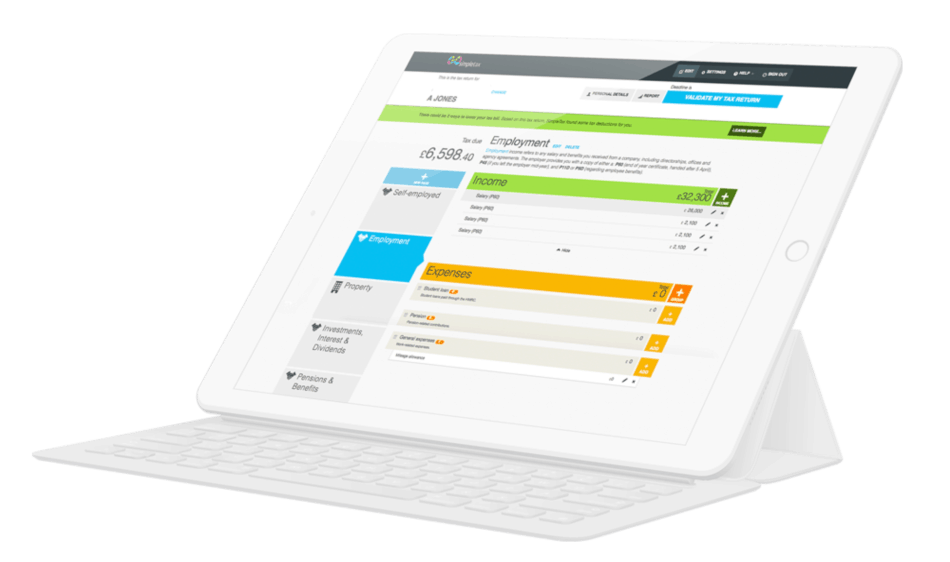
- If you need to report share or investment income, GoSimpleTax offers you an easier way to complete and file your Self Assessment tax return. And to ensure that your tax return is error-free and that you’re paying no more tax than necessary, why not get your Self Assessment tax return checked by one of our experts?
Blog content is for information purposes and over time may become outdated, although we do strive to keep it current. It's written to help you understand your Tax's and is not to be relied upon as professional accounting, tax and legal advice due to differences in everyone's circumstances. For additional help please contact our support team or HMRC.

5 Excellent Reasons to Choose Us to File Your Tax Return
Discover how to make tax returns a doddle...
Find out moreSelf Assessment and MTD Tax Returns: What £50K Earners Need to Know
02 Jun 2026
What happens after I file my Self Assessment tax return?
11 May 2026
What’s Changing Under the UK’s New Foreign Income Rules in 2026?
08 Apr 2026