About a quarter of the UK adult population (about 14m people) is reported to own stocks and shares. People living in the UK hold more than 10% of UK quoted shares (ie shares listed and traded on a recognised stock exchange).
Shares can provide a welcome additional source of income through regular dividend payments. Many people receive regular share dividend payments as directors of small limited companies that they own and run. The value of stocks and shares can increase significantly over the longer term, giving a far better return on investment when compared to other options.
So, what tax is payable on share dividends, sales of shares and savings interest and how should you report such income to HMRC?
Tax on share dividend income
- Tax isn’t payable on share dividend income until it goes over your annual Dividend Allowance, which is £500 (2025/26 tax year).
- Even if you do receive more than £500 a year in dividend payments, if your total income is below the annual Personal Allowance (£12,570 in 2025/26), you can still receive £13,070 (which includes £500 in share payments) and pay no Income Tax.
If your dividend income is taxable, your Income Tax band determines how much is payable.
- Basic rate Income Tax payers (£12,571 to £50,270 taxable income) pay 8.75% tax on share dividend income.
- Higher rate Income Tax payers (£50,271 to £125,140 taxable income) pay 33.75% tax on share dividend income.
- Additional rate Income Tax payers (more than £125,140 taxable income) pay 39.35% tax on share dividend income (*2025/26 tax year for all figures*).
Reporting taxable share dividend income to HMRC
You must tell HMRC if you received taxable share dividend income in the previous tax year.
- If you received dividend income of up to £10,000 and normally send a Self Assessment tax return, you summarise your total dividend income in the income section on page three of your main tax return (the SA100 form).
- If you don’t normally file a Self Assessment tax return, after the end of the tax year (5 April) and before 5 October, you must either contact the HMRC helpline to tell them about your taxable income or you can ask HMRC to change your tax code so that tax you owe is deducted directly from your wages or pension.
- If your share dividend income for the year is more than £10,000, you must complete and file a Self Assessment tax return. If you don’t normally do this, you must first register for Self Assessment before 5 October following the end of the tax year (5 April) in which you received taxable share dividend income.
Need to know! Thanks to the ISA allowance, you can invest up to £20,000 a year into ISAs (Individual Savings Accounts), which are sheltered from both Income Tax and Capital Gains Tax. Most income from a stocks and shares ISA is tax-free.
What if you sell your shares?
- When you sell your shares Capital Gains Tax can be payable if you make a gain (ie profit). To work out whether any tax is payable, you’ll first need to work out that gain (ie sale price minus purchase price).
- You also get a Capital Gains Tax allowance of £3,000 a year, so, no tax is payable unless your gains are more than this within the tax year.
- If your total gains are less than £3,000, you won’t need to report them, unless you’re registered for Self Assessment or you sold them for more than £50,000.
- If your total taxable gains are above the Capital Gains Tax allowance threshold, you must report to HMRC via Self Assessment and pay Capital Gains Tax. If necessary, you’ll first need to register for Self Assessment.
- You’ll then need to complete a Self Assessment tax return and supplementary pages SA108 (Capital Gains Tax summary) to report your capital gain.
- The amount of tax payable will be determined by your Income Tax Band.
Tax on savings interest
Most people don’t pay tax on their savings interest, because interest rates are low and relatively small amounts are deposited. The starting rate for savings is another determining factor regarding how much tax is payable. The more income you receive from other sources, the less it’s worth.
- If your other income is less than £17,570, your starting rate for savings allowance is worth up to £5,000. Every £1 of other income above your Personal Allowance (£12,570 in 2025/26) reduces your starting rate for savings by £1.
- If your other income is £17,570 or more, you’re not eligible for the starting rate for savings.
Basic rate Income Tax payers can also get a tax-free Personal Savings Allowance of £1,000, while higher rate tax payers get £500. For joint accounts, interest is split equally between the account holders. You’ll pay tax on any interest above your allowance at your usual rate of Income Tax.
- If you’re self-employed, you report any interest earned on savings in your Self Assessment tax return (page three of your SA100).
- If you’re not self-employed, you need to register for Self Assessment if your income from savings and investments is more than £10,000.
- If you’re employed or receive a pension, HMRC will collect any tax you owe by changing your tax code. HMRC will estimate how much interest you’ll get in the current year by looking at how much you got the previous year.
Failure to report income from taxable share dividend payments, sale of shares or savings interest is tax evasion and can result in an HMRC fine and payment of the outstanding amount of tax. The size of the fine will be determined by the amount of unpaid tax and whether you deliberately sought to avoid playing tax.
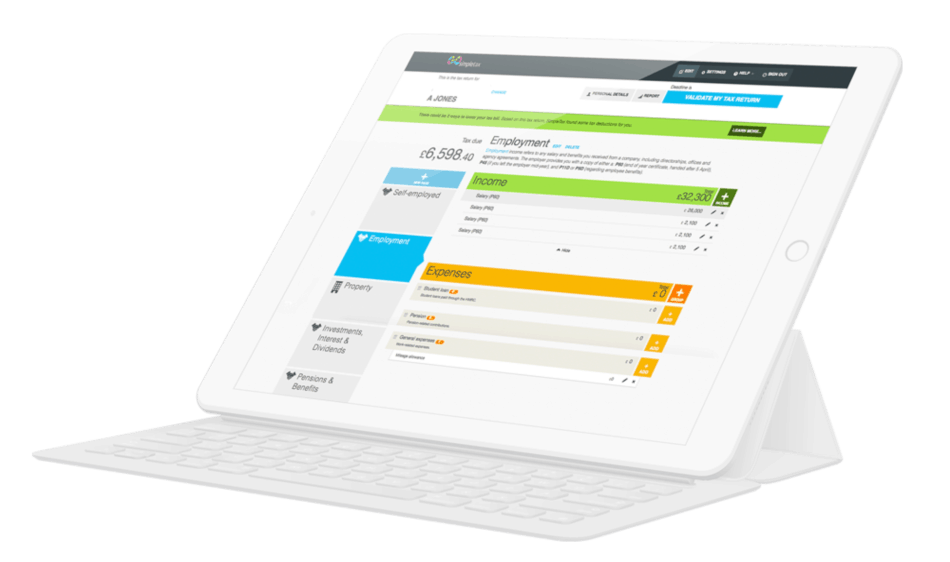
If you need to report income from dividends, disposal of shares or taxable savings interest, GoSimpleTax offers you an easier and quicker way to complete and file your Self Assessment tax return. Automatic prompts also make basic mistakes much less likely when you’re filling in your tax return. Thousands of people already use GoSimpleTax to report their taxable income to HMRC. Enjoy a FREE trial to find out how GoSimpleTax makes completing tax returns so much simpler.
Blog content is for information purposes and over time may become outdated, although we do strive to keep it current. It's written to help you understand your Tax's and is not to be relied upon as professional accounting, tax and legal advice due to differences in everyone's circumstances. For additional help please contact our support team or HMRC.

5 Excellent Reasons to Choose Us to File Your Tax Return
Discover how to make tax returns a doddle...
Find out moreSelf Assessment and MTD Tax Returns: What £50K Earners Need to Know
02 Jun 2026
What happens after I file my Self Assessment tax return?
11 May 2026
What’s Changing Under the UK’s New Foreign Income Rules in 2026?
08 Apr 2026