There are 2.82m private landlords in the UK and overwhelmingly they’re small, individual landlords who rent out one or two properties. Maybe you’ve just become a small private landlord or you’re thinking about it in the near future.
You’re bound to have questions, chief among them, whether your rental income is taxable, and if so, how do you let UK tax authority HMRC know about it. You’ll also likely be wondering about what tax expenses you can claim and how much tax you’ll end up paying. No problem. Read on to get the answers to these and other important questions.
Is rental income taxable?
If you personally own the property or properties that you rent out, the first £1,000 of your property income is tax-free. This is your ‘property allowance’. If you own the property or properties with others, you each get the £1,000 property allowance. However, if you claim it, you cannot claim for tax expenses related to renting out your property, so be clear about which option is best for you.
- You need to contact HM Revenue and Customs (HMRC) if your property rental income is £1,000-£2,500 a year. HMRC will tell you how to report the income and pay any tax due.
You must report your rental income via a yearly Self Assessment tax return if it’s more than £2,500 after allowable expenses or £10,000 before allowable expenses. As the name suggests, allowable expenses are costs that you pay to rent out your property that HMRC allows you to claim back as tax expenses. This reduces your tax bill.
Self Assessment is the system HMRC uses to collect Income Tax from small private landlords, self-employed sole traders and others. There is no legal requirement to tell your employer that you’re renting out property, it’s your personal business.
Need to know! If you’ve been earning taxable rental income for some years, but haven’t been reporting it to HMRC, perhaps because you didn’t realise it was taxable, you can still report it to HMRC. The penalty will be lower than if HMRC finds out about it without you volunteering the information.
Registering for Self Assessment
- If you haven’t registered previously, you must do so before 5 October following the end of the tax year (5 April) during which you earned taxable rental income. If you don’t – you can be fined.
- You register for Self Assessment online via government website GOV.UK.
- You need a Government Gateway user ID and password to register. You can create one when you sign in for the first time. You must give your full name, postal address, date of birth, telephone number and UK National Insurance number. You’ll also be asked why you’re registering. You’ll then get your Unique Taxpayer Reference (UTR) number by post within 15 working days.
- If you’ve registered for Self Assessment before but did not send a tax return last year, you must register again to reactivate your account.
Keeping financial records
You’re required to keep accurate records of your rental income and expenses, so that you can reliably fill out your Self Assessment tax return. Using good basic tax software to maintain financial records is highly recommended. It can save you a lot of time and effort when completing your tax return, because the figures are far easier to access.
You can be fined by HMRC if your records aren’t accurate, complete and legible. You may be asked to provide proof (eg invoices for cleaning or decorating) of all property-related tax expenses claimed. Falsely claiming expenses or deliberately underreporting rental income to avoid tax can lead to a big fine. If you avoid paying tax altogether and get caught, it will lead to a penalty, as well as payment of all backdated tax owed, plus interest.
Allowable expenses for small private landlords
You pay tax on your rental income profit, which is the total rent (ie gross rental income) you receive minus allowable expenses. Allowable expenses can include:
- Fees for letting agents, accountants and solicitors fees for lets of a year or less, or for renewing a lease for less than 50 years.
- Insurance (buildings and contents).
- Maintenance and property repairs (not improvements).
- Cleaning and gardening.
- Utilities such as gas, water and electricity if you pay them.
- Rent, ground rent, service charges.
- Council Tax (if you pay it).
- landlord-related phone calls, stationery, stamps, advertising, etc.
Need to know! Allowable expenses do not include the cost of buying a property or renovating it. If you rent out furnished or partly furnished property, you may be able to claim replacement of domestic items relief when you replace a domestic item (eg bed, sofa, carpets, curtains, fridge, crockery, cutlery, etc).
Self Assessment tax returns
Each year you must complete and file a Self Assessment tax return (called an SA100), plus supplementary tax return pages SA105 to report your rental income and expenses you wish to claim. If you receive taxable income from other sources (eg self employment), you may have to complete other supplementary pages and file them.
- You will need to complete SA102 Employment supplementary pages for each employment (ie job) you have and submit it with your SA100. It will show how much you’ve earned and how much tax your employer has deducted. You’ll get this information from your P60.
Need to know! You must file your Self Assessment tax return before the online-filing deadline of midnight on 31 January. If you don’t, there’s an immediate £100 fine.
How much Income Tax will you pay?
You’ll pay tax on your taxable net rental income, which is your gross rental income minus your allowable expenses.
- The Income Tax band into which your total taxable income falls determines how much tax you pay on your rental income.
- You’ll pay 20% Income Tax on £12,571-£50,270; 40% on £50,271-£125,140; and 45% on total taxable income above £125,140 (bands are rates are different in Scotland).
- As a small private landlord, no National Insurance contributions are payable on your rental income.
After you’ve filed your annual Self Assessment tax return, HMRC will tell you how much tax you owe. The deadlines for paying your tax bill are: 31 January for any tax you owe for the previous tax year (called a “balancing payment”) and your first payment on account (payments towards your next tax bill); 31 July for your second payment on account. You can pay in instalments before the deadline, should you prefer.
Need to know! HMRC is phasing in Making Tax Digital for Income Tax from 6 April 2026. It will mean landlords earning over certain annual gross rental income thresholds (ie £50,000 from 6 April 2026, then £30,000 from 6 April 2027, then £20,000 from 6 April 2028) will be required by law to keep digital records of their rental income and expenses and report quarterly updates to HMRC, before making adjustments and a final confirmation after the fourth quarter. For many landlords, it will replace Self Assessment.
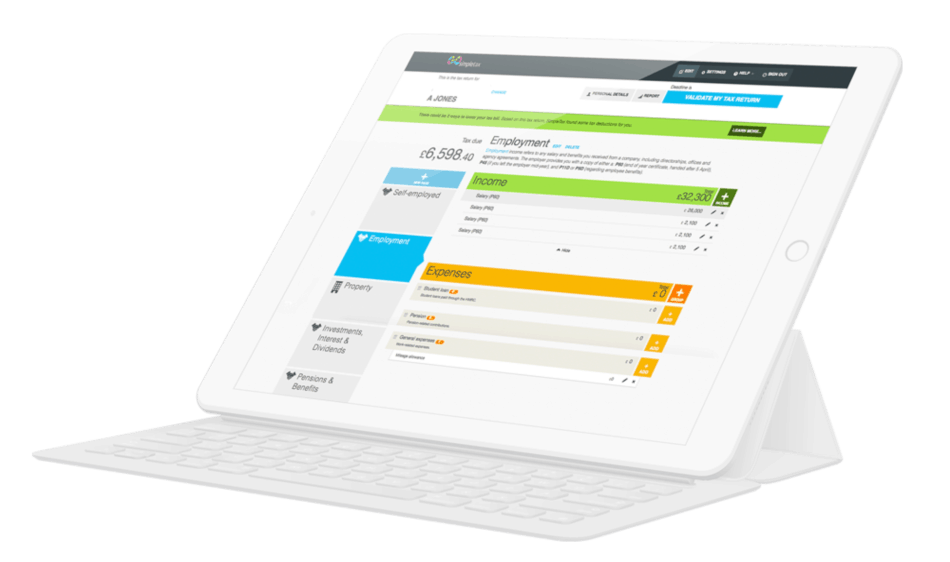
GoSimpleTax makes reporting taxable rental income via Self Assessment easier, quicker and cheaper than paying an accountant. GoSimpleTax can ensure that all necessary parts of your tax return are completed without basic mistakes, giving you peace of mind. Enjoy a FREE, no obligation trial to find out how GoSimpleTax makes completing tax returns so much simpler.
Blog content is for information purposes and over time may become outdated, although we do strive to keep it current. It's written to help you understand your Tax's and is not to be relied upon as professional accounting, tax and legal advice due to differences in everyone's circumstances. For additional help please contact our support team or HMRC.

5 Excellent Reasons to Choose Us to File Your Tax Return
Discover how to make tax returns a doddle...
Find out moreSelf Assessment and MTD Tax Returns: What £50K Earners Need to Know
02 Jun 2026
What happens after I file my Self Assessment tax return?
11 May 2026
What’s Changing Under the UK’s New Foreign Income Rules in 2026?
08 Apr 2026