No one gets it right all the time – including HMRC. Although in most instances its decisions are correct, if you believe they’re wrong, you can challenge HMRC tax decisions and penalties.
You can challenge HMRC decisions about an Income Tax, Corporation Tax or VAT bill, or a decision to deny you a tax relief or allowance. You can even challenge an HMRC request for information or to check your financial records. Whether you’re right or ultimately get what you want is another matter. Plus – you could be wrong and HMRC could be right.
Often life gets in the way, which could give you a reasonable excuse for missing a filing or payment deadline that you want HMRC to consider. Until HMRC has investigated the matter, you may be able to delay paying a tax bill or penalty.
Appealing HMRC tax decisions
When HMRC decides on a tax matter, normally, it sends a decision letter, telling you what to do if you disagree. You have 30 days to appeal or accept a review (explained below). If you want to successfully appeal after 30 days, you’ll need a justifiable excuse (eg you’ve been in hospital, very ill or your spouse, partner or other close relative has recently been ill or died, etc).
- If you disagree with a “direct tax” (eg Income Tax, Corporation Tax, Capital Gains Tax, National Insurance contributions, Inheritance Tax) decision, you have 30 days to appeal using the form you received with your decision letter. Alternatively, you can write to HMRC (at the address on the letter) explaining why you think the decision is wrong.
- You must also include your name/business name, UTR number, additional supporting information, the figures you believe to be correct and an explanation of how you worked them out.
- The HMRC officer who made the decision will look at your case again, consider your appeal and aim to reach an agreement with you. They’ll send you a new letter to explain their decision.
- If they don’t change their original decision or an agreement can’t be reached, you’ll be offered a review. You have 30 days to accept (by writing to the same HMRC office) or you can appeal to the tax tribunal (which takes longer).
Need to know! You can request a review at any time after making an appeal, without having to wait to find out the outcome.
HMRC tax decision reviews
- If you choose to have HMRC review a tax decision or penalty, it will be investigated by a “review officer”, who will be someone from a different team who wasn’t involved in the original decision.
- This is called a “statutory review” and they usually take 45 days (you’ll be informed if it’s going to take longer).
- When completed, the review officer will write to you to tell you that they have either upheld the original decision, changed it or cancelled it. If upheld and you accept, you must pay the penalty or outstanding tax. If cancelled, you won’t need to do anything.
- If you disagree with the review finding, you can appeal to the tax tribunal within 30 days of the date of the review result letter. Alternative dispute resolution (ADR) is another option, providing you have first appealed to the tax tribunal.
What if you disagree with a VAT decision?
VAT is an “indirect tax”. If you disagree with a VAT decision, the letter you receive from HMRC will offer a review. You get 30 days to accept or you can appeal to the tax tribunal (which takes longer). You can’t get a deadline extension to appeal to the tribunal, but if you request a review you can ask HMRC to extend the deadline, for example, if you need to gather more information to support your claim.
How to appeal a Self Assessment late filing or late payment penalty
If you file your Self Assessment tax return after the deadline or don’t pay your Self Assessment tax bill when due, HMRC will send you a penalty notice, explaining why you’ve been served and how much you owe.
- You can appeal a penalty if you believe you have a reasonable excuse for filing or paying late (eg you’ve been seriously unwell, in hospital or you’ve suffered a close personal bereavement).
- If it’s a late-payment penalty, HMRC recommends that you pay it anyway, because if your appeal is not successful, interest will be payable on the overdue tax from date of issue.
- If your appeal is successful, HMRC will repay you in full, plus interest, as long as you don’t have any outstanding tax to pay.
- You appeal either online or by downloading form SA370 or SA371 from the HMRC website to appeal by post (which takes longer).
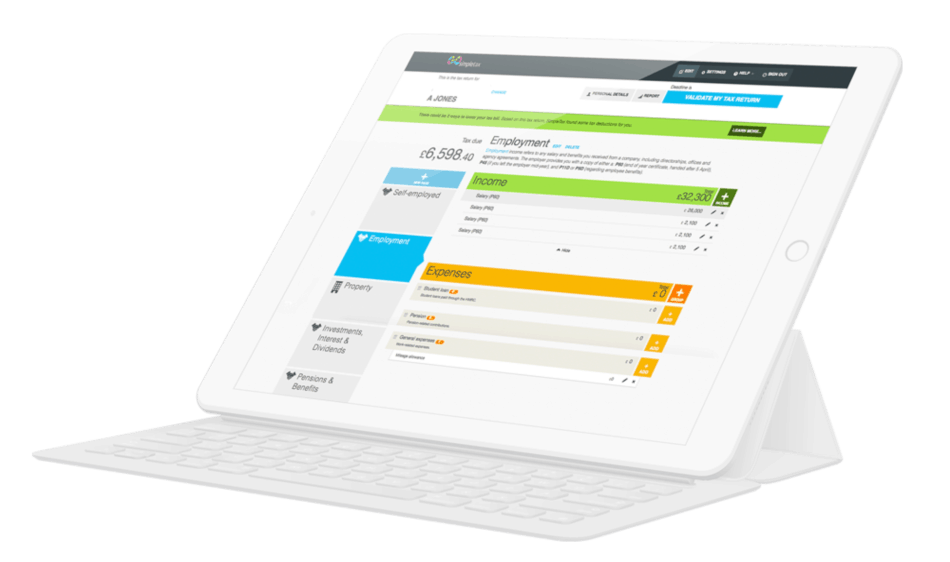
GoSimpleTax offers you an easier and quicker way to complete and file your Self Assessment tax return. Automatic prompts also make basic mistakes much less likely when you’re filling in your tax return. Many thousands of people already use GoSimpleTax to report their taxable income to HMRC. Enjoy a FREE trial to find out how GoSimpleTax makes completing tax returns so much simpler.
Blog content is for information purposes and over time may become outdated, although we do strive to keep it current. It's written to help you understand your Tax's and is not to be relied upon as professional accounting, tax and legal advice due to differences in everyone's circumstances. For additional help please contact our support team or HMRC.

5 Excellent Reasons to Choose Us to File Your Tax Return
Discover how to make tax returns a doddle...
Find out moreSelf Assessment and MTD Tax Returns: What £50K Earners Need to Know
02 Jun 2026
What happens after I file my Self Assessment tax return?
11 May 2026
What’s Changing Under the UK’s New Foreign Income Rules in 2026?
08 Apr 2026