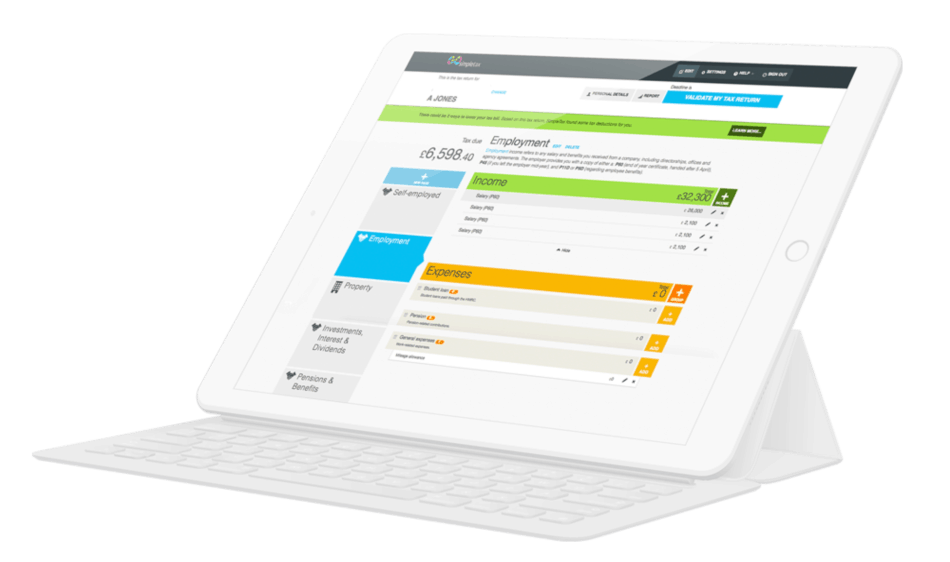
Making Tax Digital is a significant government initiative that will digitise the UK tax system for users and that process is already underway. VAT-registered businesses have already been affected by Making Tax Digital changes and Income Tax Self Assessment taxpayers will be next.
Making Tax Digital is being introduced because the government wants to make it easier for people and businesses to manage their tax affairs more easily and efficiently, while helping to prevent basic tax errors that cost the UK many billions of pounds a year in lost tax revenue.
Making Tax Digital for Income Tax: what will change?
The introduction of Making Tax Digital for Income Tax Self Assessment will bring in new reporting requirements. The planned changes mean Income Tax Self Assessment taxpayers won’t any longer be required to file a Self Assessment tax return each year.
When Making Tax Digital for Income Tax is introduced, instead, you’ll need to maintain digital records of your income and expenses and send digital quarterly summaries to HMRC. To do this and so that you comply with MTD for Income Tax requirements, you’ll need to use compatible third-party software.
Based on the figures you send each quarter, you’ll get an estimate of how much tax you owe. Then at the end of the tax year, you’ll need to make an end of period statement (EOPS), confirming the figures you’ve submitted, with any accounting adjustments made (ie allowances, reliefs, etc). You’ll also need to submit your final declaration and HMRC will tell you how much tax you owe for that tax year.
You can apply for Making Tax Digital for Income Tax exemption if it’s not practical for you to use software to keep digital records or submit data to HMRC digitally, because of your age, disability, location (ie poor internet connection) or other justifiable reason (which can include religion). If your reason is accepted, HMRC will provide an alternative solution.
Need to know! If you currently keep financial records in paper form (unless you have a justifiable reason for exemption – see above), you’ll need to start using MTD-compliant software. Non-compliance may result in penalties.
When is MTD for ITSA being introduced?
MTD for ITSA is being introduced on 6 April 2026, so you have until then to get the necessary software and sign up. In the meantime, if you want to get used to the new Making Tax Digital for Income Tax recording and reporting requirements, you may be able to sign up now for MTD for Income Tax.
You need to be a UK resident who is already registered for Self Assessment. Your accounting period must align with the UK tax year (ie 6 April to 5 April), you must have submitted at least one Self Assessment tax return previously and be already keeping digital records. Your tax records must be up to date and you cannot have any outstanding tax bills.
When must you send MTD for Income Tax data to HMRC?
You’ll need to send a summary of your income and expenses online via your HMRC digital account at the end of each quarter. You’ll get up to a month after the end of each quarter to do this. The standard quarterly periods and deadlines in each UK tax year are:
| Quarterly period | Quarterly deadline |
|---|---|
| 6 April to 5 July | 7 August |
| 6 July to 5 October | 7 November |
| 6 October to 5 January | 7 February |
| 6 January to 5 April | 7 May |
According to HMRC, at a later date, MTD ITSA taxpayers “will be given the option to use calendar quarters”, although that means none of the above quarterly filing deadlines will change.
Need to know! As with the current system, late submissions or payments under MTD for ITSA may result in penalty fines.
What is the deadline for paying my MTD for Income Tax tax bill?
You must pay your MTD for Income Tax tax bill on or before 31 January in the following tax year. So, for the 2026/27 tax year, you must pay your tax bill on or before 31 January 2028.
Despite the introduction of MTD for Income Tax, millions of taxpayers still need to budget effectively and perhaps put away some money each month from their income to ensure that they have enough money to pay their tax bill. Some things never change.
GoSimpleTax is award-winning software that offers you an easier way to complete and file your Self Assessment tax return. And to ensure that your tax return is error-free and that you’re claiming all of your allowable expenses, why not get your Self Assessment tax return checked by one of our experts?
Blog content is for information purposes and over time may become outdated, although we do strive to keep it current. It's written to help you understand your Tax's and is not to be relied upon as professional accounting, tax and legal advice due to differences in everyone's circumstances. For additional help please contact our support team or HMRC.

Ready for Making Tax Digital
Coconut and GoSimpleTax are part of the same family and Coconut is built for MTD.
Make the switch simpleSelf Assessment and MTD Tax Returns: What £50K Earners Need to Know
02 Jun 2026
What happens after I file my Self Assessment tax return?
11 May 2026
What’s Changing Under the UK’s New Foreign Income Rules in 2026?
08 Apr 2026