There are thought to be about 250,000 active Airbnb listings in the UK. And while some properties in the more popular places can be let out pretty much throughout the year, demand for others spikes during certain months, which means they can be empty at other times.
So that they continue to earn an income, some property owners combine Airbnb letting with short-term residential lets or possibly longer arrangements. An owner might even stay at the property themselves for periods throughout the year, which can be true of those who own holiday-let properties. And more than a third of Airbnb hosts share their home by listing a private bedroom in their primary residence.
What allowable expenses can you claim?
Claiming allowable tax expenses become slightly less straightforward when property use is mixed as above. As the name suggests, allowable expenses are costs that HMRC allows you to claim as a tax expense.
You can deduct allowable expenses from your rental income when working out your taxable profit, but only if a cost arose “wholly and exclusively” for the purpose of renting out your property.
Allowable property rental expenses can include:
- general maintenance and repairs
- water rates, Council Tax, gas and electricity
- insurance (eg contents and public liability)
- service charges (eg for gardeners or cleaners)
- consumables (eg toilet rolls, hand wash, tea, coffee, etc)
- letting agent fees and management fees
- some legal fees
- accountant fees
- phone calls, stationery, marketing and advertising
- vehicle/travel costs
- Airbnb service fees (you pay 3% per booking)
- internet and TV license cost
- mortgage interest
How much can you claim?
A cost can only be claimed if it’s “wholly and exclusively” for your property business, which is what you’re running if you’re generating taxable rental income. You cannot claim for personal use – all such costs should be reliably calculated and paid for out of your own pocket.
- So, for example, if you have an Airbnb property that you personally use for a two-week holiday each year, you must discount all costs during those two weeks. You should discount the personal-use proportion of each cost when working out your tax expenses for the year.
After your allowable expenses are deducted, your Airbnb/other rental income is subject to Income Tax if your total taxable income is above the Personal Allowance threshold, which is £12,570. This is the amount you are allowed to earn before any Income Tax is due. How much tax you pay is determined by the Income Tax band your total taxable income falls into.
How to split expenses
You must apply a fair, reasonable and reliably accurate method to work out what percentage of a cost you can claim as an allowable expense. You can use:
- Time basis: For example, your property is let for 180 days in a tax year and you use it for 185 days – 180/365 x 100 = 49% tax deductible.
- Area basis: If only certain rooms are let, for example, two rooms out of four – 50% of certain costs.
- Combined: For some costs, it can be necessary to use both time and area (eg utilities).
You claim Airbnb/rental property allowable expenses by summarising them in supplementary pages SA105, which you submit with your main SA100 Self Assessment tax return. You need to keep detailed records of your income and expenses, as well as invoices and sales receipts, because HMRC can ask for proof of your tax expense claims.
Need to know! From April 2026, Making Tax Digital for Income tax will start to be introduced. This will require landlords to maintain digital records of their income and tax expenses, summaries of which will need to be sent digitally to HMRC every quarter.
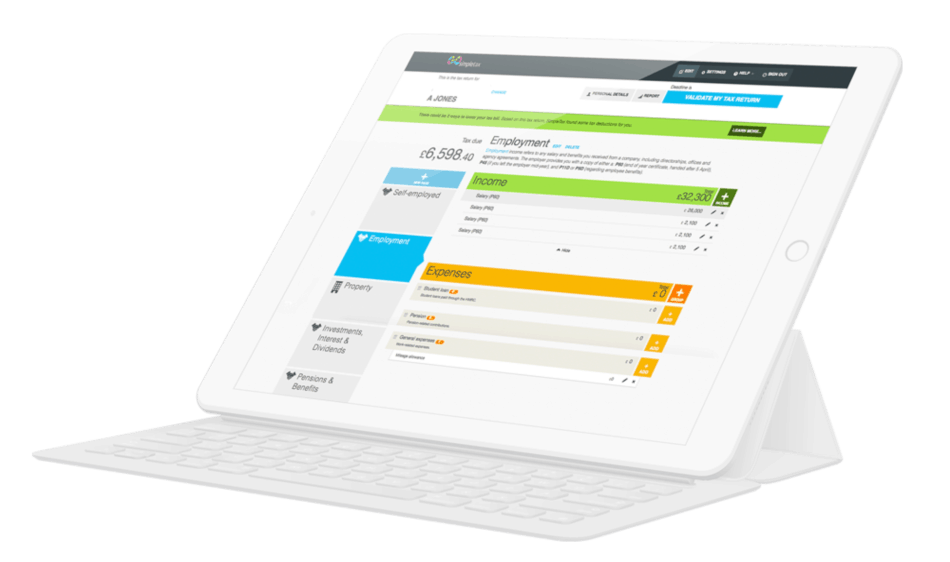
GoSimpleTax is award-winning software that offers you a quicker, easier and cheaper way to complete and file your Self Assessment tax return. It can also help you to ensure that you’re claiming all of your allowable expenses. Our Coconut MTD software can help to ensure that you record and report your income and expenses according to Making Tax Digital for Income Tax rules.
Blog content is for information purposes and over time may become outdated, although we do strive to keep it current. It's written to help you understand your Tax's and is not to be relied upon as professional accounting, tax and legal advice due to differences in everyone's circumstances. For additional help please contact our support team or HMRC.

5 Excellent Reasons to Choose Us to File Your Tax Return
Discover how to make tax returns a doddle...
Find out moreSelf Assessment and MTD Tax Returns: What £50K Earners Need to Know
02 Jun 2026
What happens after I file my Self Assessment tax return?
11 May 2026
What’s Changing Under the UK’s New Foreign Income Rules in 2026?
08 Apr 2026